Can You Really Improve Bone Density with Osteoporosis?
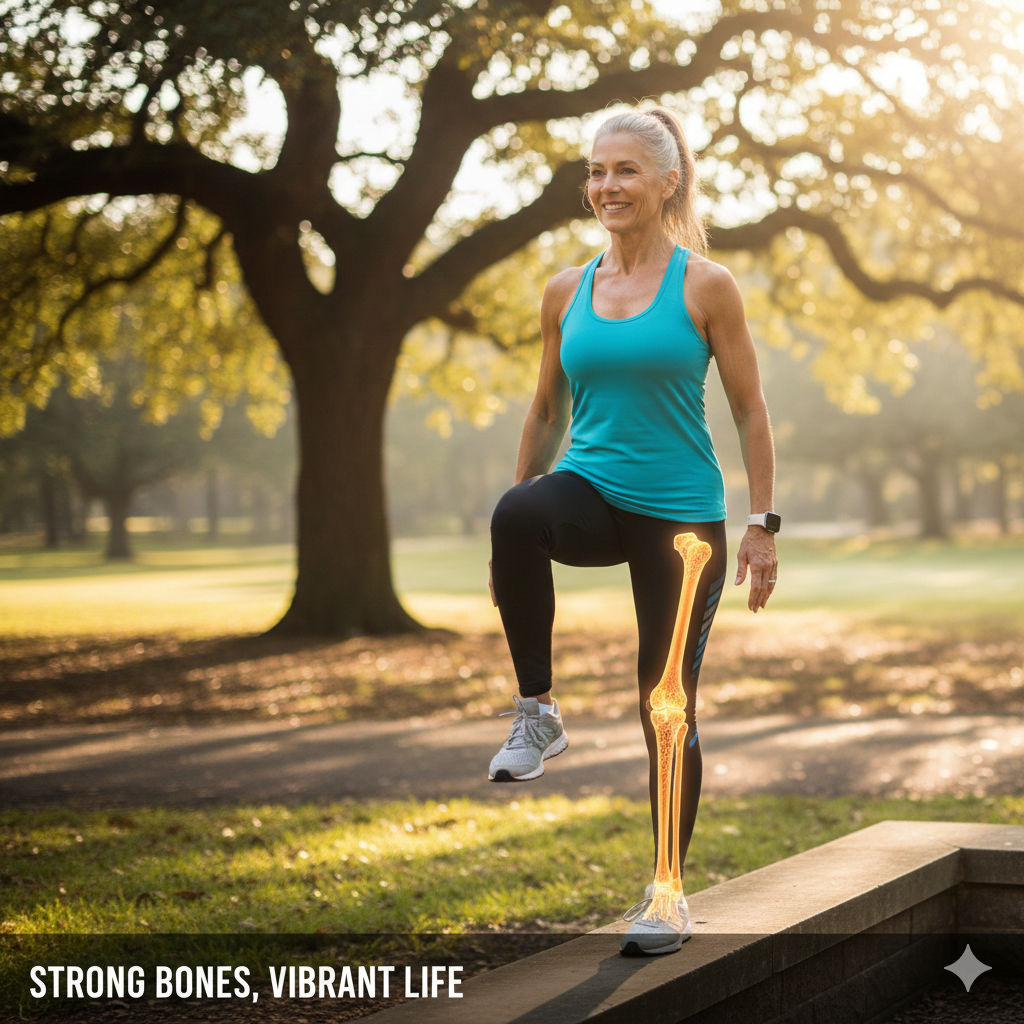
If you've been diagnosed with osteoporosis, you've probably wondered whether your bones can actually get stronger again—or if it's all downhill from here. Here's the reassuring truth: osteoporosis is not a life sentence of brittle bones. Your skeleton is living tissue that responds to the right stimulus, even after years of bone loss. The research consistently shows that combining targeted exercise with appropriate medication can not only slow further deterioration but actually improve bone density and reduce fracture risk. This isn't about reversing decades of bone loss overnight, but about giving your bones what they need to rebuild and strengthen. Let me walk you through exactly how this works and what you can do about it.
Yes, You Can Still Improve Your Bone Health
An osteoporosis diagnosis feels frightening, but it doesn't mean your bones have stopped responding to healthy stimuli. Bone is metabolically active tissue that constantly remodels itself throughout your entire life. Even in your 70s and 80s, your bones retain the capacity to strengthen when given the right signals.
The most effective approach combines exercise and medication, each working through different mechanisms. Medications help slow the breakdown of existing bone, while exercise stimulates the formation of new bone tissue. This dual strategy addresses both sides of the bone remodeling equation.
:::keytakeaway Your bones remain responsive to mechanical loading throughout life—osteoporosis changes your starting point but doesn't eliminate your capacity to improve. :::
Studies of postmenopausal women with osteoporosis show that those who combine resistance and impact training with medication achieve significantly better outcomes than those using medication alone. We're talking about measurable improvements in bone mineral density at high-risk sites like the spine and hip, plus meaningful reductions in fracture rates.
Understanding What Actually Builds Bone
Your bones strengthen through a process called mechanical adaptation. When you apply force to your skeleton—whether through impact, resistance, or weight-bearing activity—specialized cells called osteocytes sense the strain. These cells signal osteoblasts (bone-building cells) to lay down new bone tissue in areas experiencing high loads.
This isn't about gentle movement. Bones need significant mechanical stress to trigger adaptation. Walking is better than sitting, but it often doesn't provide enough stimulus to build bone density once you already have osteoporosis. The forces need to be greater than what your bones experience in daily life.
:::tip Think of bone adaptation like strength training for muscles—you need progressive overload. If the stimulus stays the same, your bones adapt and stop responding. Gradually increasing the challenge is essential. :::
Weight-bearing exercises (where your bones support your body weight) and resistance training (using weights or bands) both create these necessary forces. The key principle is progressive loading—systematically increasing the intensity, volume, or complexity of exercises over time. Start with what's appropriate for your current bone density, then gradually advance as your bones strengthen and your confidence grows.
Impact Exercise: Your Bone-Building Secret Weapon
Impact training might sound dangerous when you have osteoporosis, but controlled impact is actually one of the most powerful bone-building stimuli available. When your foot strikes the ground during jumping or stomping, it creates a sudden, brief force that travels through your skeleton. This rapid loading triggers a stronger bone-formation response than slow, gradual forces.
From a movement perspective, this makes evolutionary sense. Your skeleton evolved to handle sudden loads—running from predators, jumping across obstacles, carrying heavy objects. These rapid forces signal your bones that they need to be strong enough to handle similar demands in the future.
Practical impact exercises include heel drops (rising onto your toes then dropping onto your heels), stomping in place, jumping jacks, or light jogging. If you're new to impact training, start conservatively. Begin with bilateral heel drops—both feet together—holding onto a counter for balance. Perform 10-20 drops, twice daily. As this becomes comfortable over several weeks, progress to single-leg heel drops or small hops.
:::warning If you have severe osteoporosis (T-score below -3.0) or a history of fragility fractures, work with a physiotherapist before starting impact training. Some modifications may be necessary for safety. :::
Frequency matters more than intensity here. Your bones respond better to consistent daily stimulus than occasional high-intensity sessions. Research suggests that 50 impacts per day, distributed throughout the day, effectively stimulates bone formation. That might be 20 heel drops in the morning, 20 at lunch, and 10 in the evening. The cumulative effect of regular, repeated loading drives adaptation.
Medication vs. Exercise: How They Work Together
Understanding how medications and exercise complement each other helps you appreciate why both matter. Most osteoporosis medications (bisphosphonates, denosumab) work by slowing bone resorption—the breakdown of old bone tissue. They essentially put the brakes on bone loss, helping you maintain the bone mass you have.
Exercise works differently. Mechanical loading stimulates osteoblasts to build new bone tissue and improves bone quality—the microarchitecture and material properties that determine bone strength. Exercise also increases muscle mass and strength, which protects bones by absorbing impact forces and improving balance to prevent falls.
:::note Bone strength depends on both quantity (density) and quality (architecture). Medication primarily addresses quantity, while exercise improves both quantity and quality. :::
This combined approach addresses both sides of the bone remodeling cycle. Medication slows the breakdown phase while exercise accelerates the building phase. Studies show that women taking bisphosphonates who also perform high-intensity resistance and impact training gain significantly more bone density than those on medication alone.
Beyond bone density, exercise provides benefits no medication can deliver: improved balance, coordination, muscle strength, and confidence in movement. These factors directly reduce fall risk—and preventing falls is just as important as strengthening bones when it comes to avoiding fractures. In my experience with similar presentations, patients who combine both approaches report feeling stronger, more capable, and less fearful of movement than those relying on medication alone.
Your Practical Action Plan
Start where you are, not where you think you should be. If you have moderate osteoporosis and no recent fractures, you can likely begin with gentle resistance training and low-level impact exercises. If your bone density is more severely compromised, work with a physiotherapist to establish a safe starting point.
Your weekly program should include three components: impact training (daily heel drops or stomping), resistance training (2-3 sessions per week targeting major muscle groups), and balance exercises (incorporated into daily routines). Combine this with your prescribed medication regimen, adequate calcium and vitamin D intake, and regular follow-up with your healthcare team.
:::tip Schedule a follow-up DEXA scan 12-24 months after starting your exercise program. This gives you objective feedback on whether your approach is working and helps maintain motivation. :::
Track your progress through both objective measures (DEXA scans, strength testing) and functional improvements (ability to carry groceries, get up from the floor, maintain balance). These functional gains often appear before measurable changes in bone density and provide important reassurance that your efforts are working. The goal isn't just stronger bones on a scan—it's a stronger, more capable you in daily life.
Conclusion
Improving bone health with osteoporosis isn't about wishful thinking—it's about understanding bone biology and applying evidence-based strategies consistently. Your bones retain the capacity to strengthen when you provide the right mechanical stimulus through impact and resistance training. Combined with appropriate medication, this approach addresses both sides of bone remodeling and reduces fracture risk more effectively than either strategy alone. Start conservatively, progress gradually, and work with healthcare providers who understand both the medical and exercise components of osteoporosis management. The research consistently shows that people who take this comprehensive approach see meaningful improvements in bone density, strength, and confidence. Your diagnosis doesn't define your future—your actions do.